Vanilla planifolia L.
Orchid Family: Orchidaceae
Also commonly known as Bourbon vanilla (after the former name of Réunion, Île Bourbon) or Madagascar vanilla.

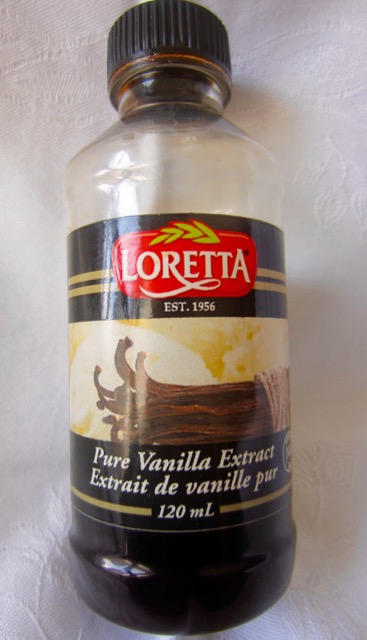
It’s is extracted from the cured fruits (also called pods or beans) of the plant species Vanilla planifolia.
The plant is a vine with thick, fleshy green stems and long leathery leaves. The fruits are yellow green pods (beans) up to 12 inches (30cm) long.
The species is indigenous to Central America and grows on the fringes of the Mexican Tropical forests.
Vanilla plants were taken to Reunion in 1822 by the French, then to Mauritius (1827) and Madagascar (around 1840). Madagascar, Comoro Island and Reunion produce about 80% of the world vanilla output.

During this time the surface of the fruit (pod, bean) is covered with glucose crystals and vanillin, the substance responsible for the fragrance.
Synthetic vanilla can be up to 20 times cheaper than the real thing but will never taste and smell like the real vanilla which has a pure spicy and delicate flavour.
The real vanilla extract is a complex mixture of several hundred different compounds, including vanillin, acetaldehyde, acetic acid, furfural, hexanoic acid, 4-hydroxybenzaldehyde, eugenol, methyl cinnamate, and isobutyric acid.
Synthetic essence consists of a solution of synthetic vanillin in ethanol.
Other species
V. tahitensis, grown in the South Pacific; and V. pompona, found in the West Indies, and Central and South America.
myfavouritpeastime.com


 My Favourite Pastime
People talk about something being vanilla like it’s bland or “every day”. I love vanilla, it’s one of the best flavours ever.
I have been to Madagascar-Vanilla Plantations. It was such a great experience. They have beautiful forests with lots of endemic species and the Lemurs too! I headed home with a huge bundle that took me years to finish.
http://www.madacamp.com/Madagascar_Vanilla
Liz